
Magnetic Assemblies
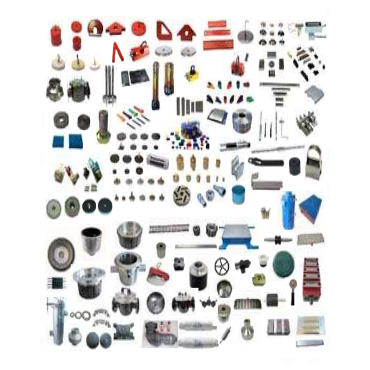
Magnetic assemblies refer to the tool or system which incorporates permanent magnetic material and different kind of non-magnetic together, then to meet the purpose of getting much stronger holding to the ferromagnetic load or obtaining an ideal magnetic field in specific space owing to the presence of the magnetic circuit.
Advantages of magnetic assemblies is to enhance Mechanical and Magnetic strength, and non-magnetic parts typically have the incorporate mechanisms for different holding applications.
Halbach Array
Halbach array was originally invented to help particle accelerators to focus beams. Magnetization direction of every two adjacent magnets in Halbach arrays differs on a specific angle, then magnetic field generated asymmetrical distribution. It can Generate a large and uniform magnetic field in a certain area. The field can even exceed the remanence of the PM material itself.
Enhance magnetic field on one side while keeping the field of the other side to very low level at the same time.
Plastic Integrated Magnet
For plastic integrated magnet, multiple components can be integrated through the injection molding process even each component has its own property. Magnet embedded in the plastic could be undamaged under external impact, also be given excellent dimensional accuracy and superior cost advantage in the production of high quantity complex assemblies, thus capture customers from civilian use to automotive applications.
There are insert molding, over molding, ultrasonic welding or some other options.
Magnetic Motor Assemblies
Permanent magnet excitation can significantly decrease power consumption and strengthen the running performance of the motor.Almost 2/3 of the rare earth PM are applied to make various kinds of PM motors nowadays. It’sprimarily composed of the rotor and stator. The rotor and stator act as the moving andstationary part in the PM motor, respectively. In addition to various motor magnets especiallylaminated magnet and radially oriented ringmagnet.
Neodymium Magnet
NdFeB magnet is the most powerful and commonly used rare earth magnet.
Neodymium magnets are primary made from an alloy of Neodymium (Nd), Iron (Fe), and Boron (B) to form the Nd2Fe14B main phase which has excellent magnetic properties. In addition, Neodymium resources comparatively rich. The successful deveopment of Neodymium magnet declared the birth of the third-generation rare earth permanent magnet. Since then, Neodymium magnets are served for nearly all industries.
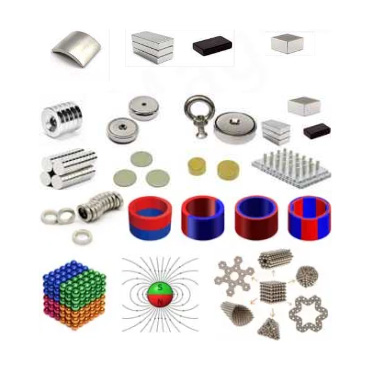
Sintered NdFeB Magnets
Produced by conventional powder metallurgy process. It still offers the strongest magnetic power nowadays and occupies an absolute predominance in the market share
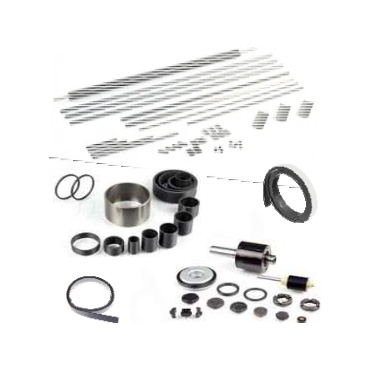
Bonded NdFeB Magnets
Composed of NdFeB powder and binder. Bonded NdFeB magnets can be further divided into compression molded and injection molded on the basis of binder type and molding process. It’s well-known for the complex shape, high dimensional precision, tight tolerance, integration capability with other functional parts, and the mass production capacity
Soft Magnetic/MIM
MIM is a metalworking process in which finely powdered metal is combined with binder material to create a “feedback” that is then shaped and solidified using injection molding. The molding process allows high volume, complex parts to be shaped in a single step. After molding, part undergoes conditioning operations to remove the binder (debinding) and densify the powders. The MIM finished products are miniature components used in many industries and applications.
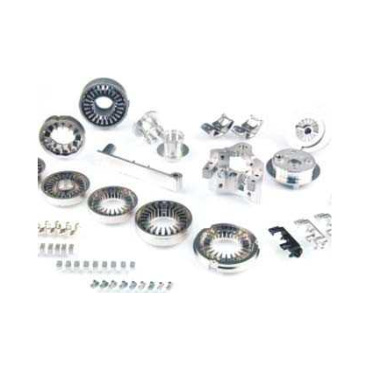
MIM Products
Material Development of MIM Products including -
• Soft Magnetic Alloy: FeSi3, FeCo 50/50
• Special Alloy: Ti, W
• Stainless Steel: 17-4PH, 316L, 420, 430, etc
